ENTRUST: Final Demonstration at ULSAC

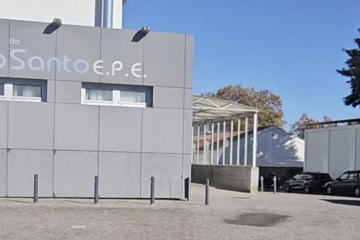
On November 28th, ULSAC held the final demonstration of the ENTRUST project, which has been underway since January 2023, through a simulation and video recording of a patient’s journey in an emergency setting. The initiative focused on ambulance monitoring and the secure transmission of real-time clinical data to the hospital, Ler mais…

PARTICLE Presents the SEAGUARD Interoperability Framework at the 30th ICCRTS 2025 Symposium

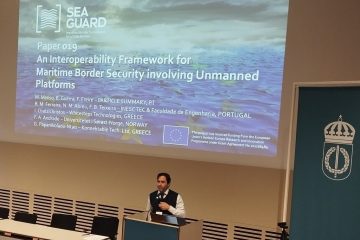
On November 4th 2025, Marco Manso (from PARTICLE) presented the  SEAGUARD Interoperability Framework at the 30th edition of the International Command and Control Research Technology Symposium, hosted by the Swedish Defence University in collaboration with the Swedish Defence Research Agency and organised by the International Command and Control Institute. Gathering Ler mais…

PARTICLE.TALK

PARTICLE.TALK provides modern IP-based private digital communications service supporting multi-protocols for chat, audio and video communication.
PARTICLE.TALK servers can be installed at the customer premisses or at PARTICLE cloud servers. Regardless, customers have full control of communications and content.

VALKYRIES – Harmonizing Response and Procedures for Emergencies and First-Aid Vehicles deployment

The increasing frequency and intensity of natural disasters require policies aimed at tackling these risks through preventive, preparedness, response and recovery actions. Increasing the resilience of infrastructure, ecosystems and society in the EU is an important strand of disaster risk management work. It is from this need that VALKYRIES was born, a project financed by the Ler mais…

Smart and Connected High-Density Sensor Networks

PARTICLE is involved in the deployment of the highest density sensor network dedicated to monitor seismic activity in Portugal. The network will be constituted by hundreds of sensors in the region of Évora. It will monitor strong seismic activity in real-time, allowing the generation of live shake maps. Importantly, the network is expected to: Enhance the knowledge on the characterisation of the seismic activity in the region through high-resolution mapping of clusters and faults; 2) Create an organised database populated with live data from the high-density seismic network; 3) Rapid assess ground shaking movements (e.g., earthquake); 4) Improve geohazard assessments.