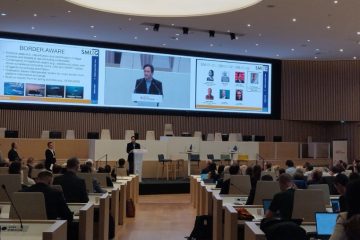
The SEAGUARD partners conducted comprehensive field trials in the Tróia Peninsula, in Portugal, hosted and coordinated by the Portuguese Navy, from September 28th to October 1st 2026. The demonstration exercises focused on advanced sea monitoring capabilities and were held at the Infante D.Henrique Technological Free Zone, which provided the security and defence companies and researchers an ideal testbed with controlled real-world operational conditions to experiment cutting-edge surveillance technologies.
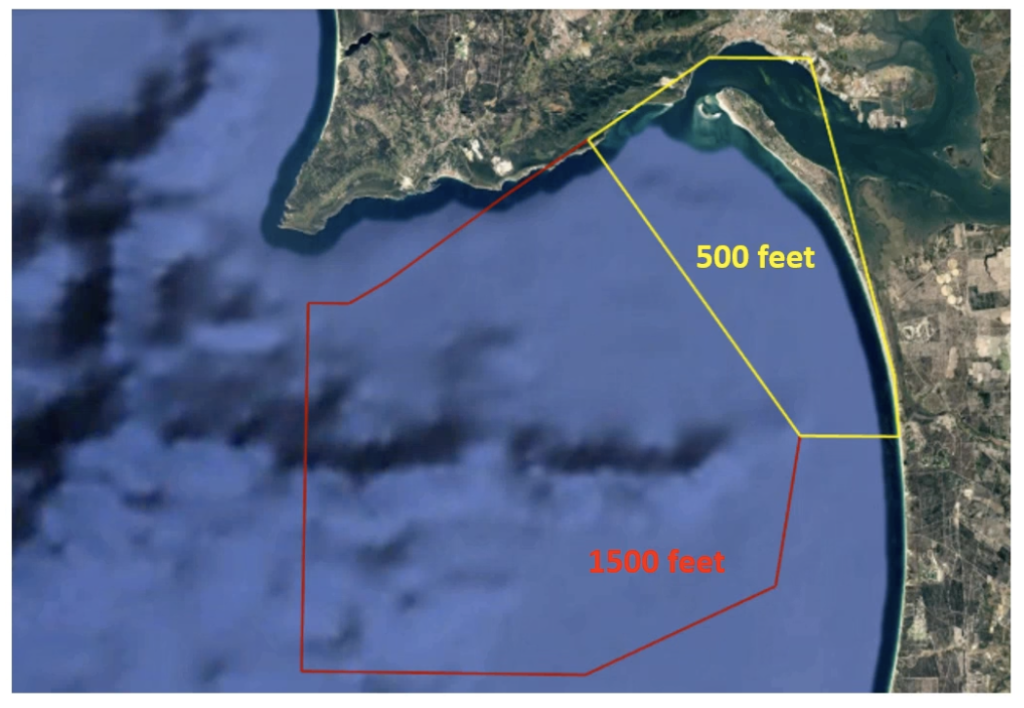
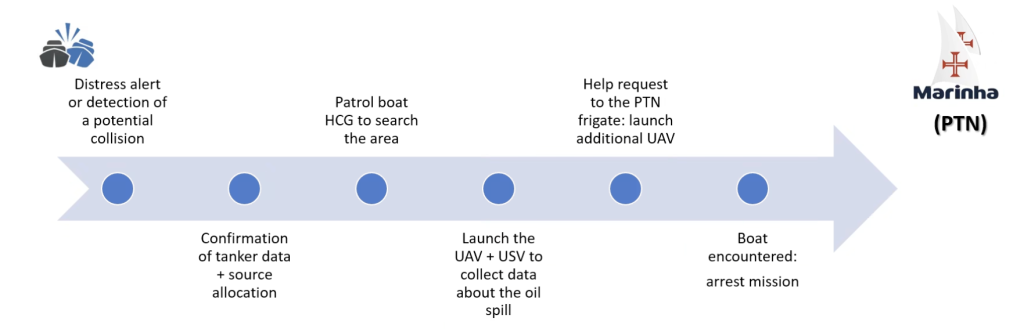
The Tróia field trials addressed maritime surveillance missions, including a collision of two boats causing an oil spill and the surveillance of an unknown small boat suspected of illegal activity. The figure illustrates the boat collision scenario, detailing the maritime intervention steps from the incident detection and identification to the deployment of manned and unmanned maritime and aerial resources and to the arrest of the offending vessel.
The maritime surveillance missions in Tróia allowed to test and validate the effectiveness, performance and interoperability of the different SEAGUARD technologies developed and integrated in the project, namely the unmanned vehicles of INESC, Magellium and UTEK, the command and control system of ARQUIMEA and the AWARE Situational Awareness Platform and Interoperability Framework implemented by PARTICLE.
PARTICLE’s AWARE Platform implemented the SEAGUARD Interoperability Framework (S.IF), empowering the creation of the SEAGUARD federation interoperability space that supports the sharing of advanced maritime surveillance capabilities of SEAGUARD assets and the exchange of intelligence data by the SEAGUARD technologies. Following a service-oriented architecture, that contributes to modularity and scalability, the S.IF defines the application programming interfaces (APIs), specifically designed to empower the connection of different SEAGUARD System modules to facilitate the sharing of capabilities, namely those related with command and control, unmanned platforms and the low-level data exchange within the communications layer.

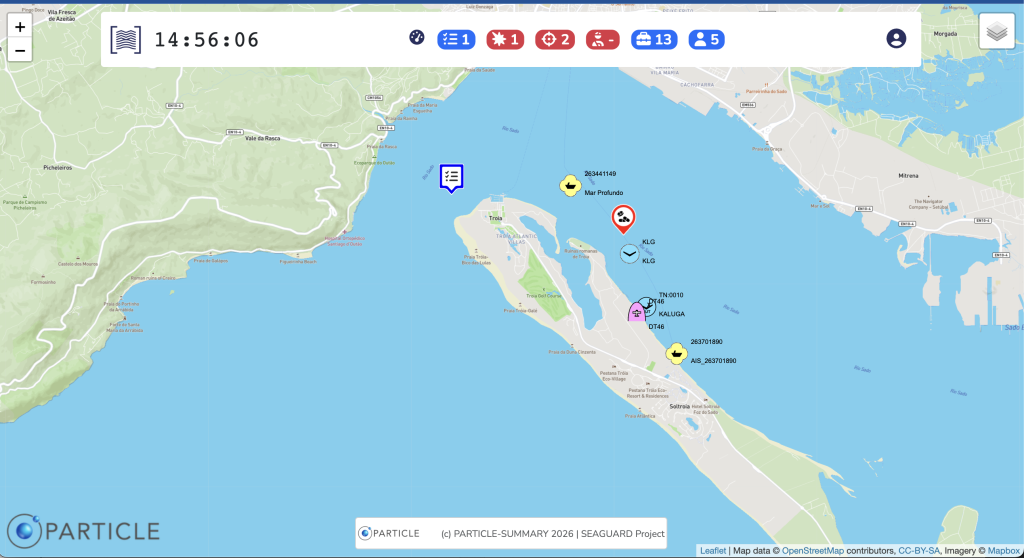
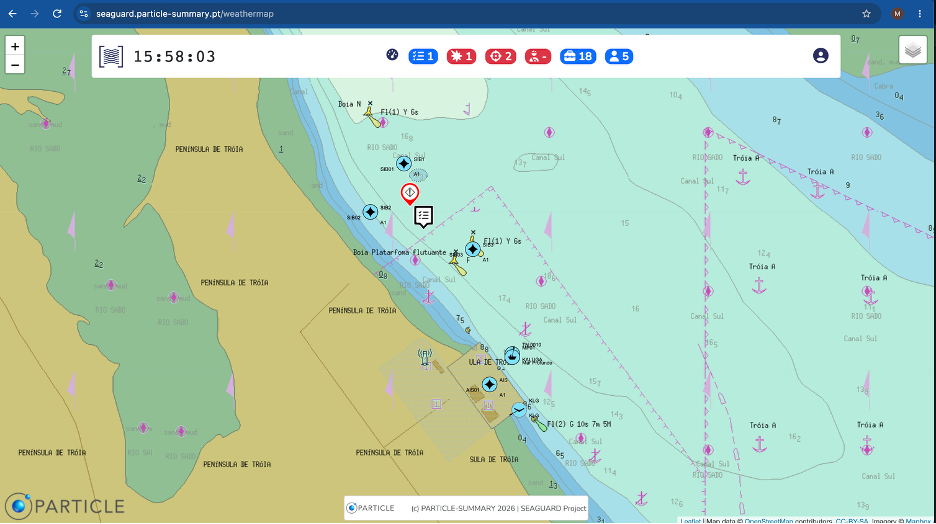
PARTICLE’s AWARE Platform was used to provide the overall situational awareness of the mission. AWARE displayed a map with live information concerning incidents, tasks, deployed assets and registered tracks and also streamed live the videos collected by the unmanned assets Kaluga (by UTEK) and DT46 drone (operated by Magellium).
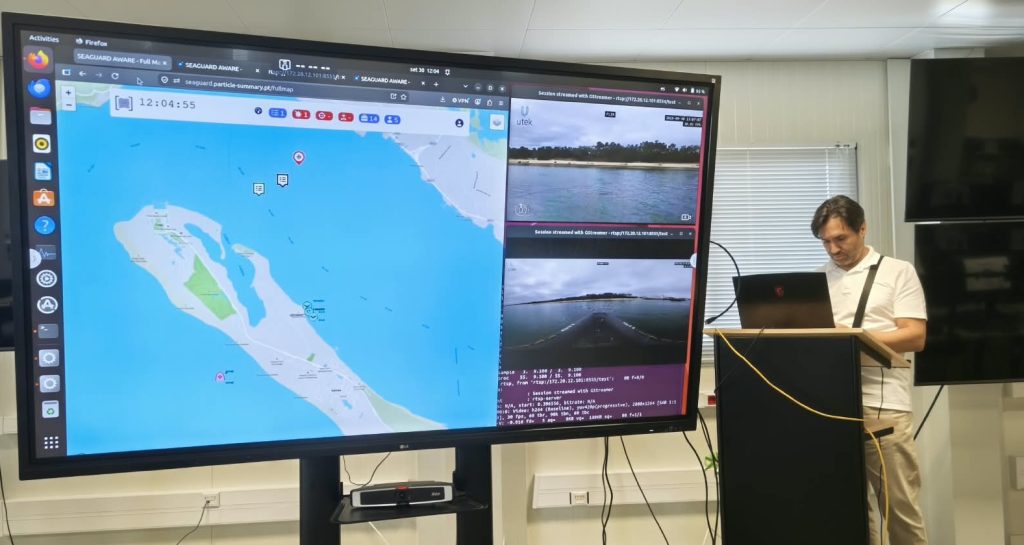
Next, the SEAGUARD partners share the media collected during the Tróia field trials.
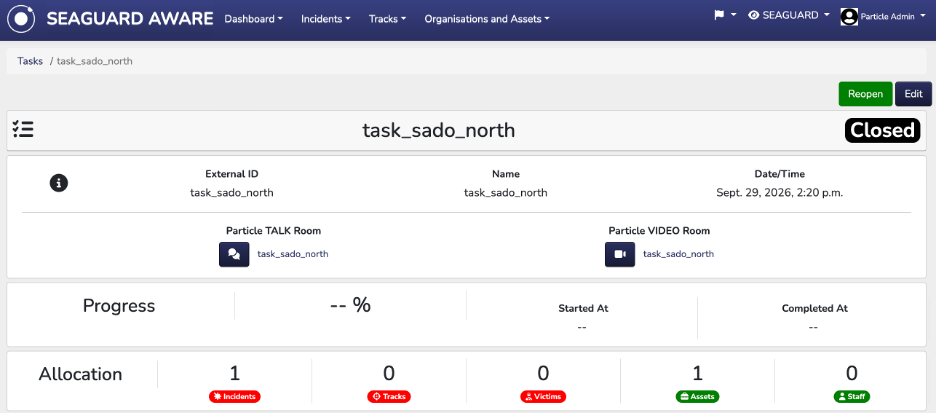
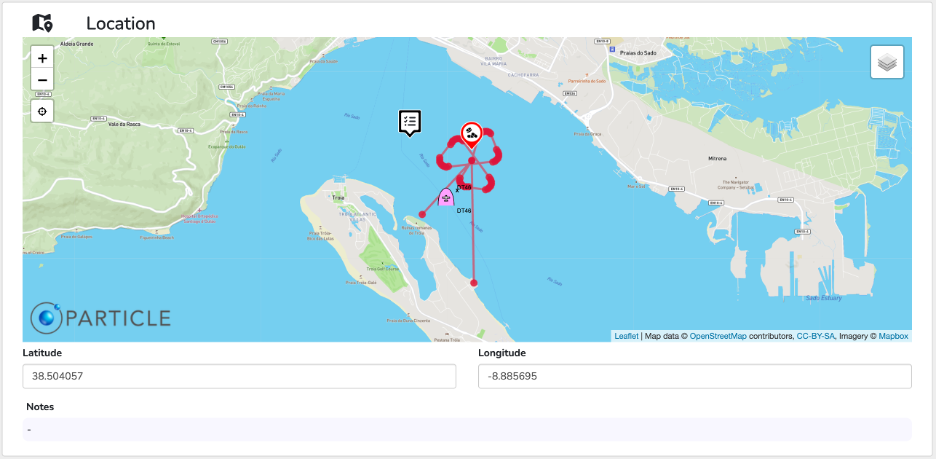
At the start of the mission, the SEAGUARD assets are tasked to perform a specific maritime surveillance mission. The figure presents the task created in association with the incident. The Magellium unmanned asset is assigned to the task and a flight plan is selected.
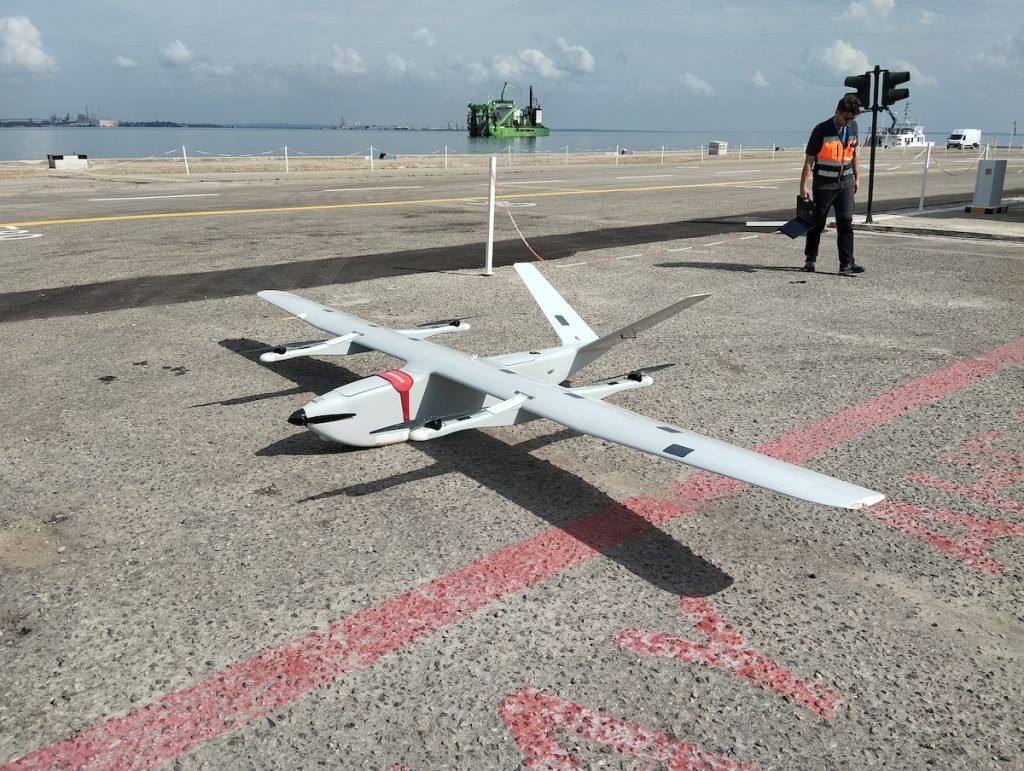
The mission unfolds with the drone keeping close monitoring of the oil spill incident and of the suspected boat. It is noted the presence of maritime traffic, such as the ferry with its location being transmitted by the Automatic Identification Service (AIS). This image is shared by PARTICLE’s AWARE Platform at 14h56.
PARTICLE AWARE in action (video in fast forward)
PARTICLE’s AWARE Platform also demonstrated the capability to display maritime maps:
The next video shows the moment when the Magellium drone captures the boat of interest.
About PARTICLE
PARTICLE offers its situational awareness platform – AWARE – to support security authorities with the visualisation and superior understanding of the common operational picture of the SEAGUARD interoperability space. The AWARE Platform displays an up-to-date operational overview of high-impact events, including maritime incidents, threats and victims, displaying deployed assets’ location and availability. The Platform uses rich visual symbology based on the APP-6D military standard.
About SEAGUARD
The SEAGUARD Project aims to integrate different types of sensor technology to achieve a more reliable picture of border areas. The Project aims to help assess situations of maritime incidents and illegal activity in maritime surveillance scenarios. In this sense, the project focuses on the design, development, and testing of advanced solutions capable of securing the interoperability of different technologies: unmanned vehicles (air, surface and underwater) and intelligent underwater cables, combined with advanced situational awareness, analytics and decision support systems. All the exchanged surveillance information is merged and processed by classification algorithms, and then made available to end-users, who will be able to make educated decisions and take action.